Guide · 4 min read
How to Clean a Mandir at Home: Marble, Wooden and Corian
By the ANAGHA team, New Delhi · Updated
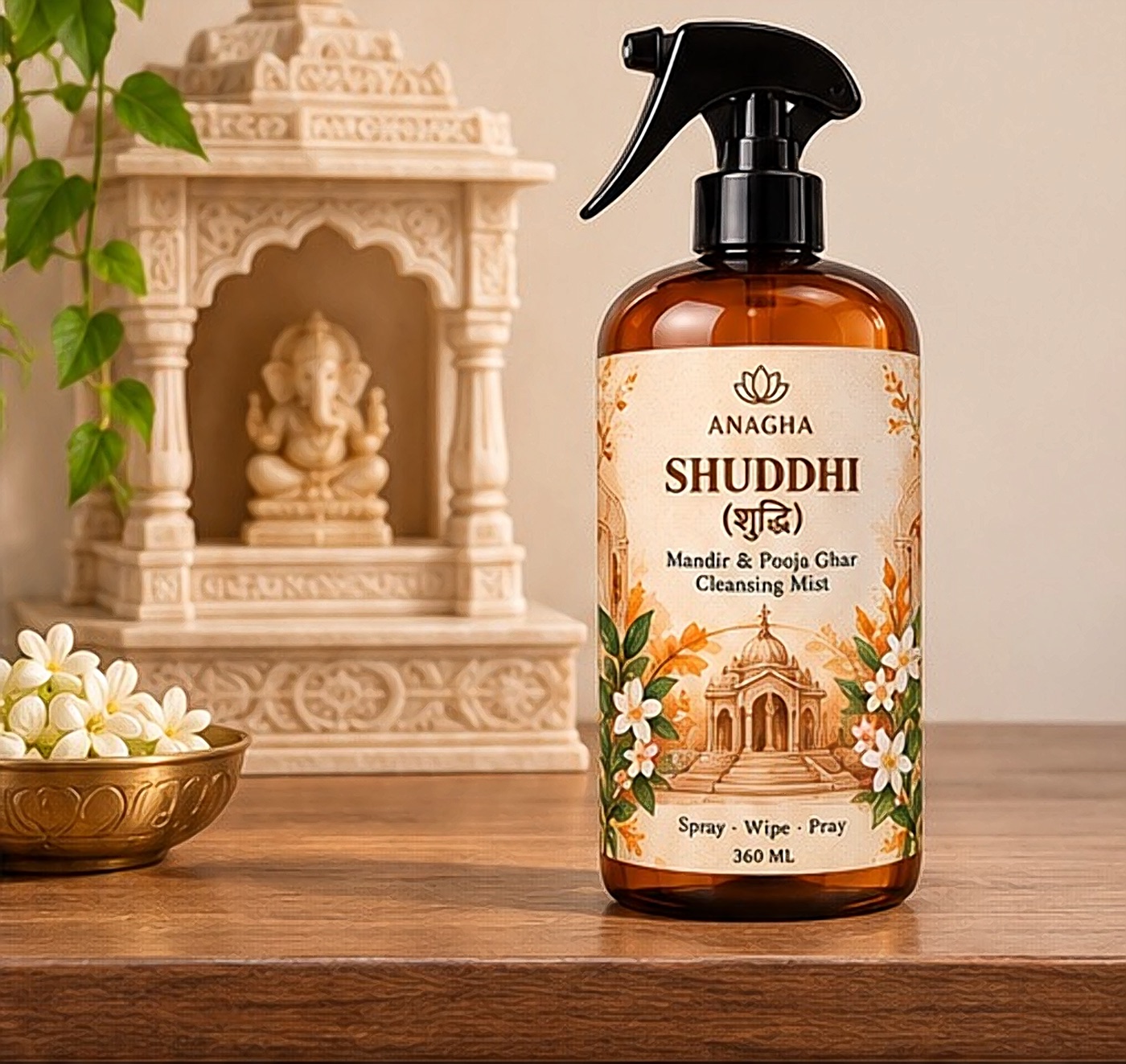
Quick answer
Move the murtis, photos and pooja items onto a clean cloth, dust from top to bottom with a dry soft cloth and brush, then wipe the surfaces with a damp microfiber cloth and a gentle, pH-neutral cleaner sprayed onto the cloth, never onto the mandir. Dry straight away, especially wood. Avoid vinegar, lemon and bleach on marble, and never soak wood. Return the deities, light a diya, and you're done in 15 to 20 minutes.
Before you start
Many families begin with a short prayer, asking permission to move the deities. Wash your hands, spread a clean cloth or plate to hold murtis and pooja items, and open a window.
- Two soft microfiber cloths: one damp, one dry
- A soft paintbrush or makeup brush for carvings and jali
- A gentle, water-based cleaner such as ANAGHA Shuddhi, or a drop of mild soap in water
- Cotton buds for corners, wax and kumkum
Step by step
- 1Clear the mandir. Move murtis, photos, diyas and the pooja thali onto a clean cloth. Shake out the asan and chunri outside.
- 2Dust from top to bottom. Use a dry cloth and a soft brush on the shikhar, carvings and jali before anything gets wet, so dust doesn't turn into smears.
- 3Wipe the surfaces. Spray two or three mists onto a damp microfiber cloth, not onto the mandir, and wipe shelves, pillars and the base.
- 4Clean the corners. A cotton bud lifts wax, kumkum and incense ash from grooves.
- 5Dry straight away with the second cloth. Water left on wood or in the pores of marble leaves marks.
- 6Wipe the floor around the mandir, return the deities with a short prayer, and light a diya or agarbatti.
Cleaning a marble mandir
Marble is soft and reacts with acid. Vinegar, lemon juice and bathroom or kitchen cleaners can etch the polish and leave dull patches, so use only pH-neutral cleaners on it.
- Everyday dust: a damp cloth with a gentle water-based cleaner, then dry.
- Oil and ghee stains: a paste of baking soda and water left for 10 minutes, then wiped off with a damp cloth. Test on a hidden spot first.
- Kumkum and haldi: wipe while fresh. Older marks may need the baking soda paste.
- Never use vinegar, lemon, bleach, scouring powder or steel wool on marble.
Cleaning a wooden mandir
Wood swells and spots when it stays wet, so use as little water as possible and always dry it immediately.
- Dust with a dry microfiber cloth every few days.
- Wipe with a cloth that is barely damp, with a little gentle cleaner on it.
- Keep diyas on a brass plate or tile so oil and heat don't mark the wood.
- Once or twice a year, a polish suited to your wood's finish brings back the shine.
Corian, acrylic and glass mandirs
Corian and other solid-surface mandirs take mild soap and water well; avoid abrasive scrubbers, which scratch. Wipe glass doors with a damp cloth and buff with a lint-free one. Acrylic scratches easily, so use only soft cloths on it.
How often should you clean your mandir?
A quick dust and wipe every day or two stops ash and soot building up. Do a deeper clean every week or two, and a full clean before festivals such as Diwali, Navratri and Janmashtami. Some families avoid deep cleaning on particular days of the week by custom, so follow your family's tradition.
What about the murtis and photos?
Clean murtis the way your family does: many bathe metal and stone murtis with water or panchamrit and dry them with a soft cloth. Don't use household cleaners or sprays on murtis, photos or sacred texts.
ANAGHA is for the mandir surfaces and the space around them, never for the deities themselves. For brass and silver pooja items, see our guide to cleaning brass diyas and silver.
Questions
What is the best liquid to clean a mandir?
A gentle, pH-neutral, water-based cleaner used on a cloth. Avoid acidic cleaners like vinegar and lemon on marble, and harsh household chemicals near pooja items. ANAGHA Shuddhi is made for this: a water-based mist with Ganga Jal, sandalwood and camphor that you spray onto a cloth.
Can I clean my mandir with vinegar?
Not if it's marble or natural stone. Vinegar is acidic and can etch and dull the surface. Diluted vinegar is fine on glass, but a pH-neutral cleaner is safer for the whole mandir.
How do I remove diya oil and soot stains?
Blot fresh oil with a dry tissue, then wipe with a cloth and a little gentle cleaner. For older oil stains on marble, apply a baking soda paste for 10 minutes and wipe it off. Keeping diyas on a small plate prevents most stains.
When is the best time to clean the mandir?
Many families clean the mandir in the morning after bathing, before the day's puja, and do a full clean before festivals. Customs vary, so follow what your family does.
Made for the space where you pray
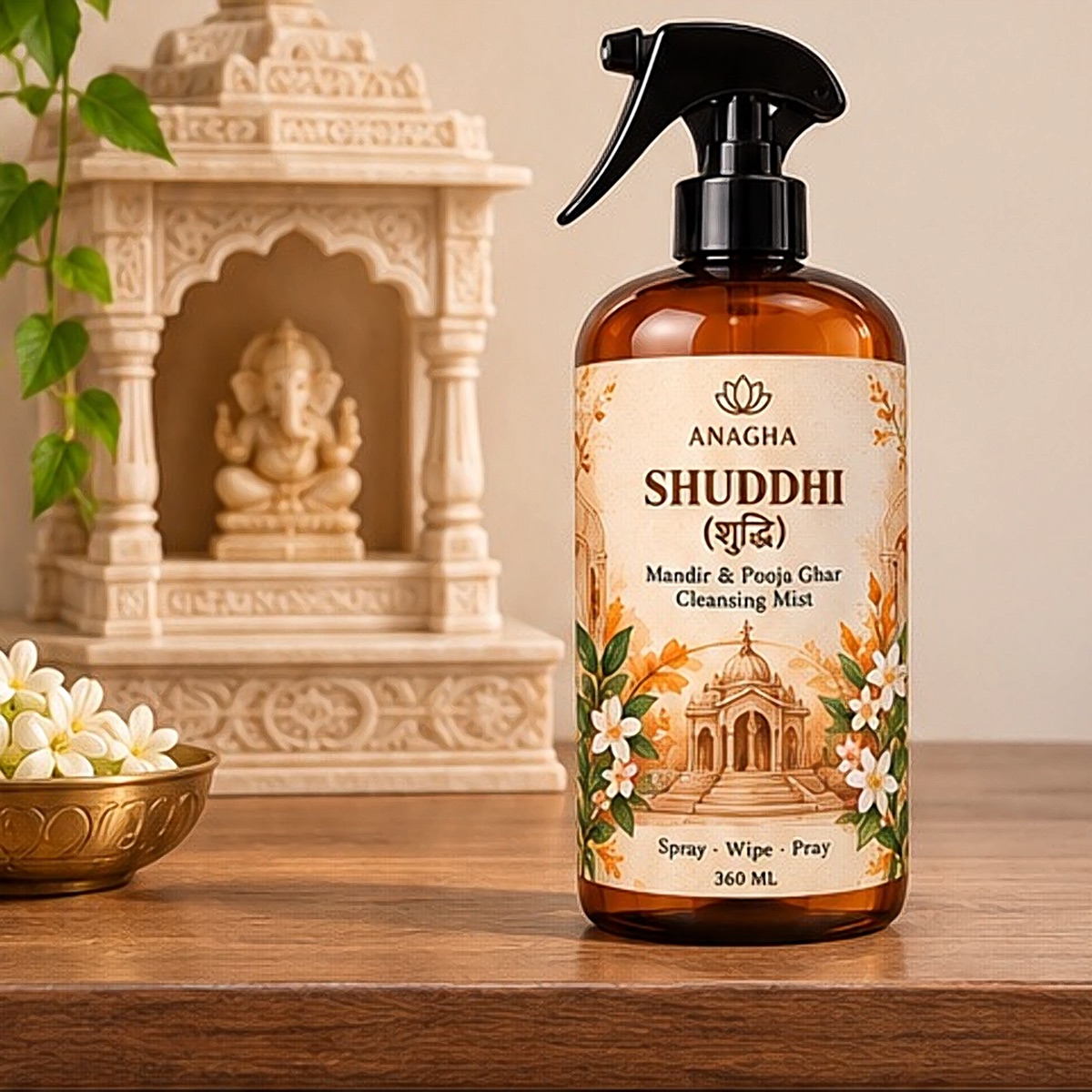
Shuddhi शुद्धि
$49
For your mandir, pooja ghar and prayer corner
Sandalwood, camphor and Ganga Jal in a gentle mist for the place where your day begins with prayer.
360 ml · Shop now →

The Duo
$69
For Punjabi and mixed households, and a thoughtful festival gift
Shuddhi and Sewa together. The gift for parents, in-laws and every home with both a mandir and a gurdwara.
2 × 360 ml · Shop now →