Guide · 3 min read
How to Clean a Pooja Room and Keep It Fresh and Fragrant
By the ANAGHA team, New Delhi · Updated
Quick answer
Clear and dust the mandir first, then wipe the walls and tiles from top to bottom with a damp cloth and a gentle cleaner, and mop the floor last. Air the room after every aarti, keep diyas on plates, and use traditional fragrances such as sandalwood, camphor and rose rather than heavy synthetic air fresheners. A five-minute daily wipe and a weekly deeper clean keep the room fresh.
A five-minute daily routine
- Remove yesterday's flowers and ash before the morning puja.
- Wipe the mandir shelf and the area around the diya with a damp cloth.
- Change the water in the kalash or lota.
- Open a window for a few minutes after agarbatti or dhoop.
The weekly deep clean
- 1Dust the ceiling corners, fan and light fittings first, so dust falls onto surfaces you haven't cleaned yet.
- 2Wipe the walls from top to bottom with a barely damp cloth.
- 3Clean the tiles or shelves with a gentle cleaner on a cloth.
- 4Clean the mandir itself (see our step-by-step mandir guide).
- 5Wash the asans and cloths, and mop the floor last.
Getting rid of soot and smoke smell
Daily diyas and dhoop leave a thin film of soot on walls and ceilings, and the smell settles into fabric.
- Wipe soot from painted walls with a barely damp cloth and mild soap. Don't scrub hard, or you'll lift the paint.
- Wash curtains, asans and chunris every few weeks.
- A small bowl of baking soda in a corner absorbs stale smells.
- In apartments in the US, UK and Canada, smoke detectors are often close to the pooja corner. Keep incense to a stick or two, ventilate well, and never leave a diya burning unattended.
Traditional fragrances for the pooja room
- Sandalwood (chandan): warm and calming, the classic temple scent.
- Camphor (kapoor): clean and sharp, the scent of aarti.
- Rose: soft and fresh.
- Fresh jasmine, mogra and marigold flowers.
- A little guggal or loban dhoop on special days.
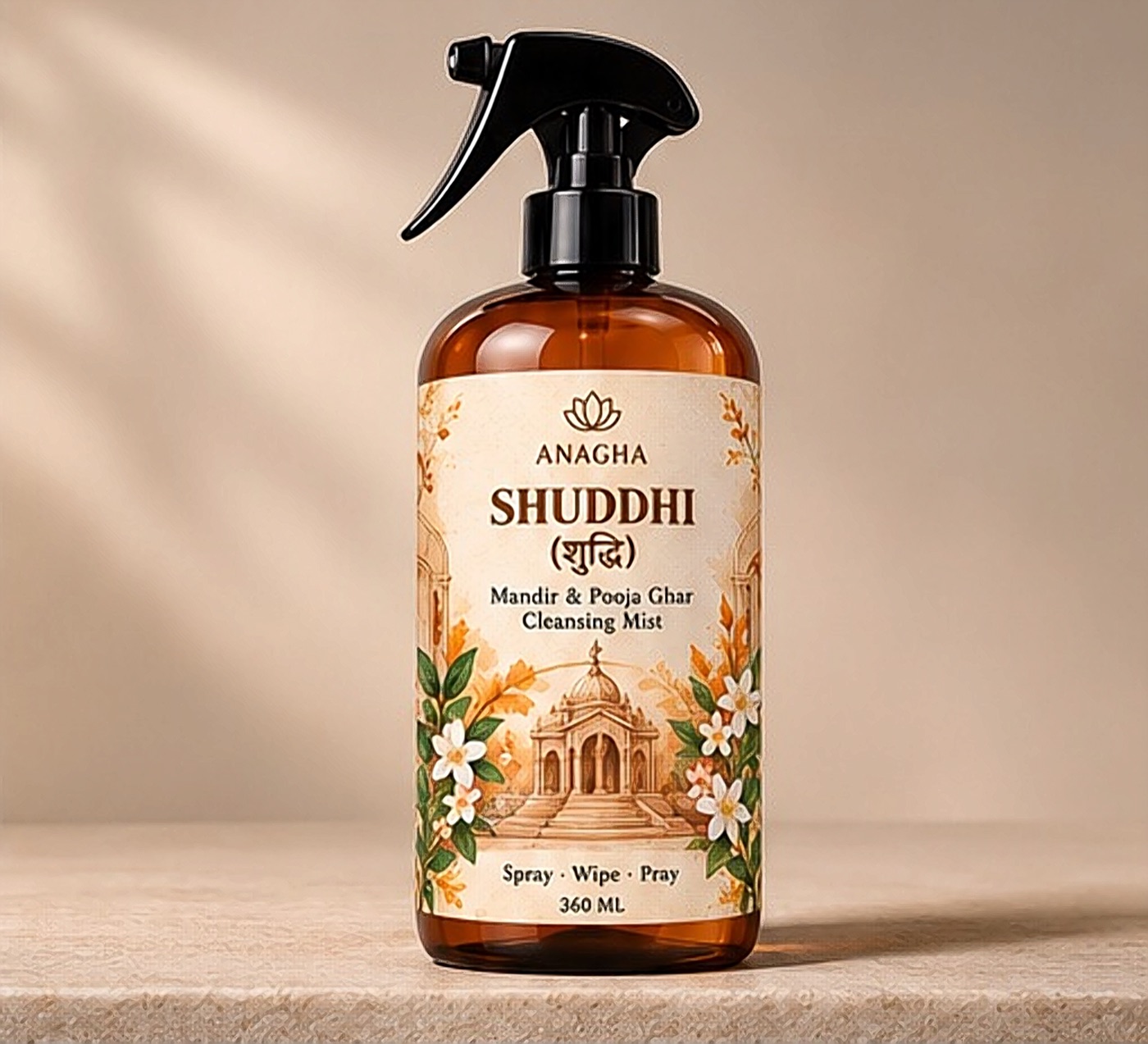
ANAGHA Shuddhi leaves a light sandalwood-and-camphor fragrance after you clean, and Sewa a soft rose-and-neem scent, so the room smells like the temple without a heavy air freshener.
Which day is best to clean the pooja room?
Traditions differ by family and region. Many people do a full clean on a day that suits their routine and before festivals, and some avoid certain days by custom. If you're unsure, ask your elders or family pandit; otherwise a calm morning before puja is a good choice.
Questions
How do I make my pooja room smell good naturally?
Clean it regularly, air it after every aarti, and use traditional fragrances: sandalwood, camphor, rose and fresh flowers. A water-based cleaning mist with sandalwood and camphor, such as ANAGHA Shuddhi, leaves a light temple scent after you wipe.
Can I use an air freshener in the pooja room?
You can, but many families prefer traditional fragrances there. Synthetic sprays can smell out of place next to incense and flowers, while a light sandalwood, camphor or rose scent feels closer to the temple.
How do I clean soot off pooja room walls?
Use a barely damp cloth with a little mild soap and wipe gently from top to bottom. Hard scrubbing lifts paint. Ventilating after aarti and keeping diyas on plates reduces soot.
How do I keep a pooja room clean in a small apartment?
Keep diyas on a tray, wipe the shelf daily, close the mandir doors when not in use, ventilate after aarti, and do a deeper clean once a week.
Made for the space where you pray
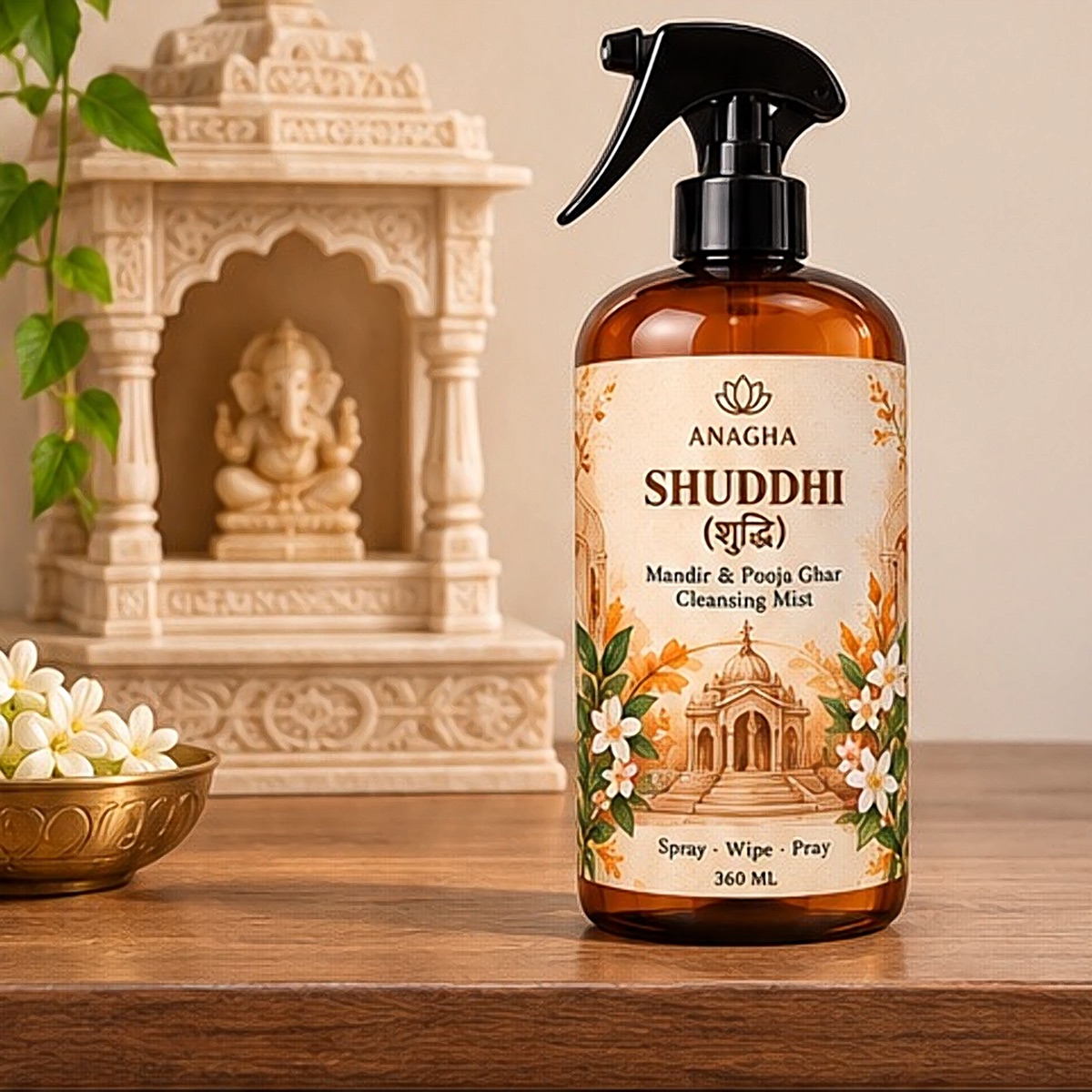
Shuddhi शुद्धि
$49
For your mandir, pooja ghar and prayer corner
Sandalwood, camphor and Ganga Jal in a gentle mist for the place where your day begins with prayer.
360 ml · Shop now →

Sewa ਸੇਵਾ
$49
For gurdwara halls, langar areas and your prayer room
Rose water and neem in a gentle mist for those who do sewa: keeping the gurdwara and the prayer room clean.
360 ml · Shop now →